
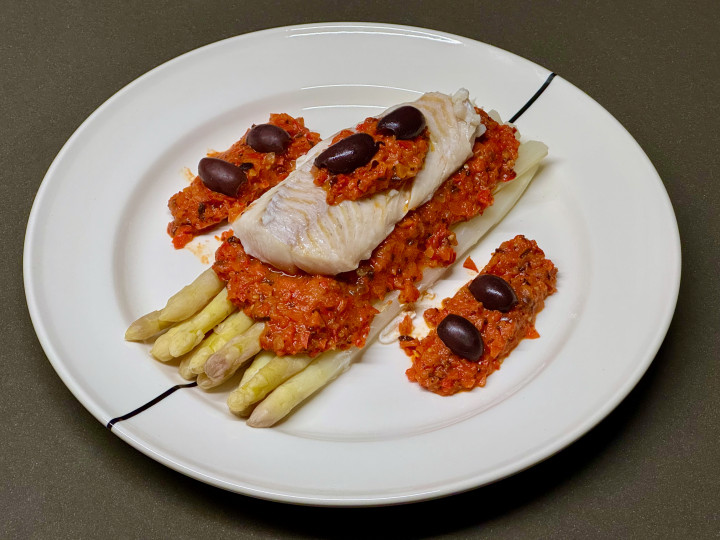
This steamed pollock and asparagus with pureed bell pepper is a refreshing, low-calorie meal that fits perfectly into a healthy lifestyle. The delicate pollock fillets and crisp asparagus are steamed, preserving their natural flavor and nutrients-without adding fat or heavy sauces. The creamy bell pepper puree, made with red bell pepper, shallots, Kalamata olives, and a hint of red chili, adds a rich, Mediterranean flavor without heavy ingredients like cream or butter.
The combination of protein-rich fish, fiber-packed vegetables, and healthy fats from the olives makes this dish not only light but also nutritious and satisfying. Ideal for anyone who enjoys a flavorful, light meal without compromising on taste or texture! Later in this article, we'll also explain exactly what pollock is.
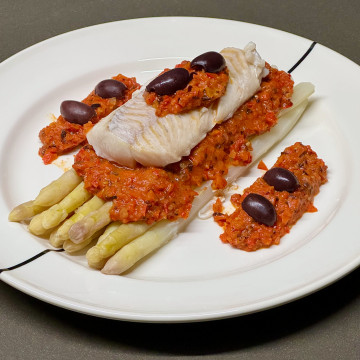
Steamed asparagus and pollock with pureed bell pepper
Ingredients
- 2 fillets pollock
- 500 grams asparagus
- 1 bell pepper red
- 1 shallot
- 15 olives Kalamata
- 5 cherry tomatoes
- 1 chili pepper red
Instructions
Some preparations
- Remove the seeds and stem from the red bell pepper. Then cut the red flesh into medium-sized pieces.
- Also remove the ends and the tough skin from the shallot. Cut this into medium-sized pieces as well.
- Remove the stem from the chili pepper and then cut it in half lengthwise. Remove the seeds and then chop it finely.
- Cut the cherry tomatoes in half.
- Peel the asparagus and remove the woody ends.
Making the pureed bell pepper
- Heat some olive oil in a pan. Then sauté the shallot and the red bell pepper in it.
- Then add the red bell pepper and cherry tomatoes. Let this simmer for ten minutes.
- Season with salt and pepper to taste.
- Transfer the mixture to a food processor and add ten Kalamata olives. Puree everything.
Steaming the asparagus and pollock
- To cook the asparagus and pollock, we'll use a steamer basket. That's why it's important to make sure the asparagus fits in the steamer basket.
- Next, steam the asparagus for eight minutes. Then add the pollock and let it cook for three minutes. That's enough.
- If you're using very thick asparagus, you may need to add a few extra minutes.
Serving the steamed asparagus and pollock with pureed paprika
- Arrange the asparagus on the plates.
- Spread a layer of bell pepper puree over the asparagus.
- Place the steamed pollock on top.
- Finish with a bit more bell pepper puree and some halved Kalamata olives.
Nutrition
How to make steamed pollock and asparagus with pureed bell pepper?
This dish is perfect for the end of spring. The weather is already warm and sunny, but asparagus season isn't quite over yet-a last chance to prepare this "white gold" one more time.
Some preparations
As always, we start with the chopping. This way, we can focus fully on cooking and steaming later.
We begin by finely chopping the red bell pepper. We don't need the stem or seeds, so we remove those. Then, we cut the remaining red flesh into medium-sized pieces, as we'll puree them after cooking.
Next, we trim the shallot, removing both ends and the hard outer skin. We then cut the shallot into medium-sized pieces as well.
A red chili pepper for a bit of heat is a must. First, we remove the stem, then halve the chili lengthwise and remove the seeds. Finally, we cut the flesh into medium-sized pieces.
Now, halve the cherry tomatoes. If you like, you can already start cooking these ingredients while you continue with the remaining prep.
Finally, it's time for the white asparagus. Peel them and remove the tough, woody ends. Since we'll be steaming them and they need to fit on the plates, you can trim them to size accordingly.
Making the pureed bell pepper
Heat some olive oil in a pan. Sauté the shallot and chili pepper until the aromas start releasing. Then, add the red bell pepper and cherry tomatoes, and let them stew for about ten minutes. You can also season with salt and pepper to taste.
Once the peppers are tender, transfer everything to a food processor. Add the Kalamata olives and puree until smooth to finish the red pepper puree.
Steaming the asparagus and pollock
For the best flavor and to preserve nutrients, we'll steam the asparagus and pollock. If you don't have a steamer, you can boil them instead.
Place the asparagus in the steamer basket, adjusting their length if needed so they fit nicely. Steam them for about eight minutes first.
Then, place the pollock on top of the asparagus-it only needs about three minutes to cook through.
Note: The cooking time for asparagus also depends on their thickness. If using extra-thick asparagus, allow a few extra minutes of steaming.
Serving the steamed asparagus and pollock with pureed bell pepper
Start by arranging the asparagus neatly on the plates. Spread a layer of the red pepper puree over the asparagus, then place the steamed pollock on top.
Finish by drizzling the remaining puree and scattering a few halved Kalamata olives over the dish.
And there you have it-your healthy, low-calorie meal to celebrate the end of spring!
What is pollock?
Pollock (Pollachius virens or Pollachius pollachius) is a white fish species from the cod family. It is known for its mild, slightly sweeter flavor and finer, softer texture compared to cod. It is rich in protein, vitamin B12, and iodine, and contains relatively little fat-making it ideal for a healthy, light meal.
Pollock is often steamed, baked, or used in soups and stews because it cooks quickly and holds its shape well. It is popular for its accessibility and versatility in the kitchen.
Pollock is sometimes confused with whiting (another cod-like fish), but whiting is even softer and less flavorful. True pollock can be recognized by its light green back and white, firm fillets.
Difference with cod
Although pollock and cod belong to the same family, there are clear differences:
Flavor and Texture:
- Pollock is softer and slightly sweeter, with a finer texture.
- Cod (Gadus morhua) has a firmer, drier texture and a more pronounced fish flavor. It is also lower in fat and is often salted or dried (e.g., as bacalhau or salt cod).
Appearance:
- Pollock has a greenish tint on its back and a white belly, with a distinctive curved dorsal fin.
- Cod is grayish-brown with a prominent white "lateral line" and a square tail fin.
Use in the Kitchen:
- Pollock is milder, making it suitable for delicate preparations like steaming or poaching.
- Cod is often baked, fried, or used in hearty dishes such as fish stew or fish and chips.
Learn more about pollock in the following articles:
- Pollock - Wikipedia.
- Pollock: the affordable superfood for health, nutrition and sustainability (Global Seafoods).
- Cod versus pollock - a comprehensive comparison (Global Seafoods).
- Are pollock and cod the same fish? (Seafood society).
More surprising.asparagus
No vegetable paints spring as white as asparagus. Normally, they're only available from March to June, which makes it absolutely essential to seize the opportunity. Below, you'll find a few more delicious and surprising asparagus recipes:
- Passionate asparagus.
- Asparagus cordon bleu.
- Fish stew with asparagus.
- Asparagus-strawberry salad.
- Asparagus with confit Chorizo.
- Flemish asparagus.
More surprising.fish
(White) fish often has a bit of a reputation for being ordinary and bland. But when prepared in the right dish, it can be incredibly delicious and surprising. So be sure to try these recipes:
- White fish on wilted spinach.
- Fish casserole with tomato-apple sauce.
- Fiskasúpa - Icelandic fish soup.
- Cod with lentil ratatouille.
- Pangasius in tomato-saffron sauce.
If you speak Dutch, you can find the Dutch version of this recipe on gerechtenweb.blog.


toondebacker says
A delicious low-carb end of spring lunch.