


A sunny summer dish: this golden Mediterranean turmeric couscous with roasted vegetables is a feast of colors, flavors, and textures. Inspired by the warm, spiced aromas of the Mediterranean, this dish combines the earthy sweetness of roasted yellow peppers and chickpeas with the fresh, tangy touch of a pomegranate or raspberry vinegar dressing. The turmeric not only gives the couscous a stunning golden hue but also adds a subtle, warming flavor that pairs perfectly with the creamy feta and crispy zucchini.
This summery couscous is not just a treat for the taste buds but also a feast for the eyes. Ideal for a summer lunch, a light dinner, or as a side dish at a barbecue, it's quick to prepare, packed with nutrients, and brings a touch of holiday vibes to your table. Let every bite transport you to the sunny beaches of North Africa!

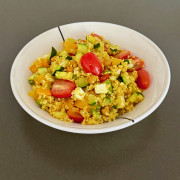
Golden Mediterranean turmeric couscous
Ingredients
- 200 grams couscous
- 400 grams chickpeas 1 can
- 2 tablespoons olive oil
- 1 tablespoon turmeric
- 1 yellow bell pepper
- 1 zucchini
- 2 cloves garlic
- 100 grams feta
- 10 cherry tomatoes
Dressing
- 2 tablespoons olive oil
- 2 tablespoons pomegranate vinegar alt. raspberry or red wine vinegar
Instructions
Roasting the bell pepper and the chickpeas
- Rinse the chickpeas thoroughly and let them drain.
- Mix the chickpeas with the olive oil and turmeric.
- Remove the stem and seeds from the bell pepper. Then cut it into small pieces.
- Preheat the oven to 180°C. Line a baking sheet with parchment paper.
- Arrange the chickpeas and yellow bell pepper on the baking sheet. Roast them in the oven for 15 minutes.
Preparing the couscous
- Bring double the amount of water to a boil for the couscous.
- Then add the couscous and let it soak for ten minutes. You can turn off the heat.
Preparing the remaining ingredients
- Crush the garlic cloves with a kitchen knife and remove the skin. Then chop the cloves into small pieces.
- Rinse the zucchini and cut it in half lengthwise. Then cut the zucchini into small pieces.
- Heat olive oil in a wok or skillet. Sauté the zucchini and garlic over high heat for a few minutes, until crispy.
- Cut the feta into small cubes.
- Halve the cherry tomatoes
- Mix the olive oil with the pomegranate dressing.
Finishing the golden Mediterranean turmeric couscous
- Take a large bowl and mix the couscous with the roasted yellow bell pepper and the chickpeas. The turmeric will give it a beautiful yellow color.
- Now add the zucchini and let the dish cool.
- Then drizzle the dressing over the golden-yellow couscous with Mediterranean vegetables.
- Finally, stir the feta and the cherry tomatoes into the yellow couscous dish.
Nutrition
How to make golden Mediterranean turmeric couscous?
Like so many Mediterranean dishes, this vegetarian golden couscous is simple and quick to prepare. So let's get started right away.
Roasting the yellow bell pepper and chickpeas
We'll start by preheating the oven to 180°C (350°F) and lining a baking tray with parchment paper.
Next, take a can of chickpeas and rinse them thoroughly under water. Let them drain while you chop the pepper.
Remove the top and bottom of the yellow pepper. You can now easily remove the stem and seeds. Cut the yellow pepper into small pieces.
Now, mix the chickpeas with olive oil and turmeric. Arrange the yellow pepper and chickpeas on the baking tray. Roast them in the oven for fifteen minutes. Then, take them out to cool.
Preparing the couscous
Now it's time to prepare the couscous. For this, bring double the amount of water to a boil. Once boiling, remove the pot from the heat and add the couscous. Let it soak for ten minutes.
Preparing the zucchini
Now, crush the garlic cloves with a kitchen knife. Remove the skin and finely chop the garlic.
Rinse the zucchini and remove the ends. Halve the zucchini lengthwise, then cut it into small pieces.
Heat some olive oil in a wok or frying pan. Sauté the zucchini and garlic over high heat for a few minutes until crispy.
Final steps
Now, mix the olive oil with the pomegranate vinegar. If you don't have that, you can also use raspberry vinegar or red wine vinegar.
Finally, cut the feta into small pieces and halve the cherry tomatoes.
Assembling the golden Mediterranean turmeric couscous
Now that all the components are ready, we just need to bring them together in this sunny, golden summer couscous.
First, in a large bowl, mix the couscous with the yellow pepper and chickpeas. Thanks to the turmeric, the couscous will take on a beautiful golden color. Together with the yellow pepper, they give this dish its lovely summery yellow hue.
Then, mix in the zucchini with garlic. Now, also stir in the dressing made with olive oil and pomegranate vinegar.
Let the dish cool further until you can add the feta cubes without them melting. Finally also add the halved cherry tomatoes.
What is couscous?
Couscous is a traditional North African dish made from semolina (ground wheat or millet). It is prepared by moistening the flour, rolling it, and sifting it into small, granular balls, which are then steamed. The result is a light, fluffy, and versatile product that serves as the base for countless dishes. Couscous is not a type of grain but rather a preparation method of wheat.
Origin: A Journey Through Time
Couscous has its roots in the Berber cultures of North Africa, particularly in Morocco, Algeria, Tunisia, and Libya, where it has been eaten for thousands of years. Traditionally, it was prepared by women in groups, often for festive occasions such as weddings or religious celebrations. The preparation was a social ritual: the dough was rolled by hand and steamed in a special couscoussier (a steaming pot with holes).
Through Arab and Moorish influences, couscous spread to Spain, Sicily, and the Middle East, where it took on local variations. Today, it is a globally beloved ingredient.
Nutritional Value: Why Is Couscous Healthy?
Couscous is not only delicious but also nutritious and easy to digest:
- Rich in carbohydrates: An excellent source of slow-release energy.
- Contains protein: About 6 grams of protein per 100 grams (dry weight), ideal in combination with legumes.
- High in fiber: Promotes healthy digestion.
- Low in fat: Fits perfectly into a balanced diet.
- Source of B vitamins and minerals: Such as folic acid, magnesium, and zinc.
- Gluten-free alternative: Made from millet, corn, or rice for people with a wheat allergy.
Usage of Couscous in the Kitchen
Couscous is extremely versatile and can be served both hot and cold:
- As a main dish with vegetables, meat, or fish.
- In salads with fresh ingredients like cucumber, tomato, and lemon.
- As a side dish for stews or stir-fries.
- As a sweet breakfast with milk, honey, and nuts (in some cultures).
Fun Fact About Couscous
In Morocco, couscous is the national dish and is traditionally served on Fridays as a family meal. In 2020, couscous culture was added to the UNESCO Intangible Cultural Heritage list as a symbol of unity and tradition.
The Difference with Pearl Couscous
Regular couscous consists of fine semolina grains (1-2 mm) that are light and fluffy and quickly absorb boiling water, while pearl couscous (or Israeli couscous) has larger, pearl-like grains (3-5 mm) that are firmer and chewier and must be boiled like pasta. Regular couscous originates from North Africa and is ideal for salads and side dishes, while pearl couscous comes from the Middle East and, due to its firm texture, is better suited for warm dishes or as a main course.
Learn more about couscous in the following articles:
- Couscous - Wikipedia.
- Couscoussier - Wikipedia.
- Uncovering the origins of couscous: the plant behind the popular dish (ShortFoodBlog).
- Couscous explained: everything you need to know about the grain-like staple, plus recipes (Forks over knives).
- Introduction to couscous (My Moroccan Food).
More surprising.NorthAfrican
Around the Mediterranean, it's not just a wonderful place to be, but also a wonderful place to eat. In Europe, we're especially familiar with Italian, Greek, and Spanish cuisines. Further east, we find ourselves in Turkish and Oriental cuisines. But if we cross the sea, we arrive in North Africa, where you'll also find the most delicious dishes. So be sure to check out the following articles:
- Moroccan meatballs with chickpeas.
- Braised eggplant with meatballs.
- North African lamb stew with vegetables.
- Green lentil soup with sweet potatoes.
- Chickpea balls in bell pepper sauce.
If you speak Dutch, you can find the Dutch version of this recipe on gerechtenweb.blog.


