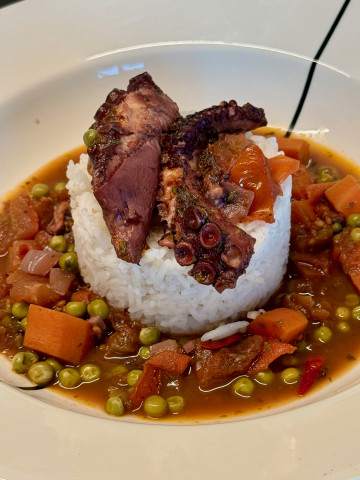
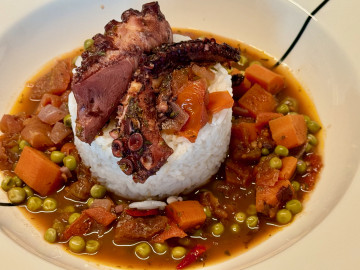
This delightful stew of octopus in red wine sauce is a delicious combination of rich flavors and healthy ingredients. The tender squid is slowly simmered in a fragrant red wine sauce, complemented by a colorful mix of vegetables like carrots, tomatoes, and peas. Be surprised by the Mediterranean influences and the simplicity of this delectable dish.


Octopus in red wine sauce
Ingredients
- 400 grams octopus
- 250 ml red wine
- 200 grams peas
- 50 ml port wine
- 4 tomatoes
- 3 cloves garlic
- 3 bay leaves
- 2 carrots
- 1 red chili pepper
- 1 onion
- 1 teaspoon oregano dried
- 1 teaspoon thyme dried
- pepper
- salt
Instructions
Some preparations
- Peel the carrots, quarter them lengthwise and then cut them into pieces.
- Remove the skin from the onion and then cut it into medium-sized pieces.
- Crush the garlic cloves with the blade of a knife. Remove the skin and then cut them into small pieces.
- Remove the stem from the chili pepper and then cut it into rings.
- Remove the green stems from the tomatoes. Then cut them into medium-sized pieces.
- Cut the octopus in medium sized pieces. Marinate them in the red wine.
Make the octopus in red wine sauce
- Heat some olive oil in a large pot and fry the onion, garlic and red chili pepper. For a minute until the aromas are released.
- Then add the carrots and tomatoes. Let them stew for a few minutes.
- Now add the octopus to the stew. We then de-glaze it with the red wine and port.
- Bring to the boil and add the bay leaves, thyme, oregano, pepper and salt and let the stew simmer for half an hour.
- After half an hour, add the peas. Mix everything well and let everything simmer for another half hour.
- In the meantime, you can also prepare the side dish, rice or Orzo.
- After an hour, test whether the squid is cooked. If not, let it simmer a little longer.
Nutrition
How to make octopus in red wine sauce?
Octopus in red wine sauce is a stew. This means it's not too difficult to make-just put everything together in the pot and let it simmer. However, like all stews, it does need some time to cook and for the flavors to blend.
Preparing the vegetables
This octopus stew comes with a lot of healthy vegetables. So the first step is to prepare these.
First, we peel the carrots and then quarter them lengthwise. This gives us four carrot quarters. Next, we chop these long pieces into smaller chunks. If you have smaller carrots, you can simply halve them lengthwise and slice them into half-moons.
Then, we remove the roots and the top of the onion. We halve it and remove the skin. Nowadays, I first halve it and then remove the skin of the onion - this is usually easier. After that, we chop the halved onion into medium-sized pieces.
The garlic cloves are first crushed with the flat side of a knife. This loosens the skin, making it easy to remove. Additionally, the crushed structure releases more flavor. We then chop the crushed garlic into small pieces.
We cut off the stem of the chili pepper and slice it into rings. If you find the seeds too spicy, no problem-halve the chili lengthwise first and remove the seeds. Then you can finely chop the flesh.
Finally, remove the stems and the green attachments from the tomatoes. After that, you can chop them into medium-sized pieces. The tomatoes will completely melt down in the stew.
Preparing the octopus
Cleaning an octopus is, like squid, a bit of work. Often, you can also buy pre-cleaned squid, which naturally makes the task easier. In that case, you only need to cut it into nice pieces.
If you need to start from scratch, and are unsure on how to do, you may have a look at these videos and articles:
- How to clean an octopus (Youtube - Sydney fish market).
- Octopus - how to clean and cook it (Kopiaste - Greek hospitality).
- How to clean and cook octopus (Giallo Zafferano).
Once the octopus is cleaned, you can marinate it in red wine. This will start breaking down the proteins and ensure it becomes tender more quickly.
Cooking the octopus in red wine sauce
The hardest part of the work is already done. Now it's time to bring the ingredients together and cook them (in roughly the right order).
We start by heating olive oil in a large pot. Then, we sauté the onion, chili pepper, and garlic for about a minute, just until the aromas are released.
Next, we add the carrots and tomatoes to the stew. Let them sauté for a few minutes as well.
Now we add the liquids to the stew: the wine and the port. The port adds a sweet flavor component. After that, the octopus is added to the stew. Let it gradually heat up and come to a simmer. This way, the octopus avoids a heat shock, which could cause the proteins to contract and turn tough. Optionally, you can also marinate the squid in the wine beforehand. Freezing the octopus beforehand is also a good way to prevent the octopus from turning chewy.
Once the stew is simmering, you can add additional herbs, such as bay leaf, thyme, oregano, or other Mediterranean spices to taste. You can also season with salt and pepper as desired.
After half an hour of simmering, add the peas. Let them simmer for another half hour. In the meantime, you can prepare the side dish. Rice or Orzo are perfect accompaniments to this squid in red wine sauce. If desired, you can remove the lid during the final 15 minutes to let the sauce reduce and thicken, which will also enhance its flavor.
Now test whether the octopus is tender. If not, let it cook for some further time. And then you have it-your delightful Mediterranean stew is ready to be enjoyed. Rice and Orzo are the perfect side dishes to absorb the flavors and sauce. And, of course, don't let that bottle of red wine go to waste.
What you need to know about octopus and squid
Squid, octopus, cuttlefish, sepia, calamari, … We know so many names for these marine mollusks. But what are the differences, and what should you pay attention to? Let's break it down here.
First and foremost, squid is the overarching term for marine mollusks. And this is the major difference from fish: they have no bones or spines but are entirely soft-bodied. However, like fish, they do have gills for breathing.
Next, we need to look at the number of tentacles. The major difference between an octopus and other types of squid lies in the tentacle count: an octopus has eight (octo), while other squid species have ten. The ink, which is the octopus's defense mechanism, is toxic. This is not the case for other squids.
Another very common type of squid is the calamari, also known as cuttlefish. This species is also very common in colder regions, such as the North Sea. When cleaned, it becomes the typical white squid we know.
Learn more about the different types of squid and their characteristics in the following articles:
- Squid - Wikipedia.
- Octopus - Wikipedia.
- What's the difference? Octopus versus squid (National marine sanctuary foundation).
- What's the difference between octopus and calamari? (Riri's Greek eats).
- Difference between octopus, squid and cuttlefish (mmmediterranean).
For this recipe, we used octopus. You can also use regular squid, but for the stew, I prefer the larger species. Another delicious and summery dish with calamari is cuttlefish in red and white. It's definitely worth trying!
More surprising.Mediterranean
The cuisine of the countries around the Mediterranean sea is absolutely delicious and more than diverse. Be sure to find some inspiration from the following articles:
- Mediterranean oven chicken with sun-dried tomatoes.
- Delicious seafood fricassee.
- Roasted yellow bell pepper with tuna.
- Moroccan meatballs with chickpeas.
- Greek style stuffed zucchini.
If you speak Dutch, you can find the Dutch version of this recipe on gerechtenweb.blog.