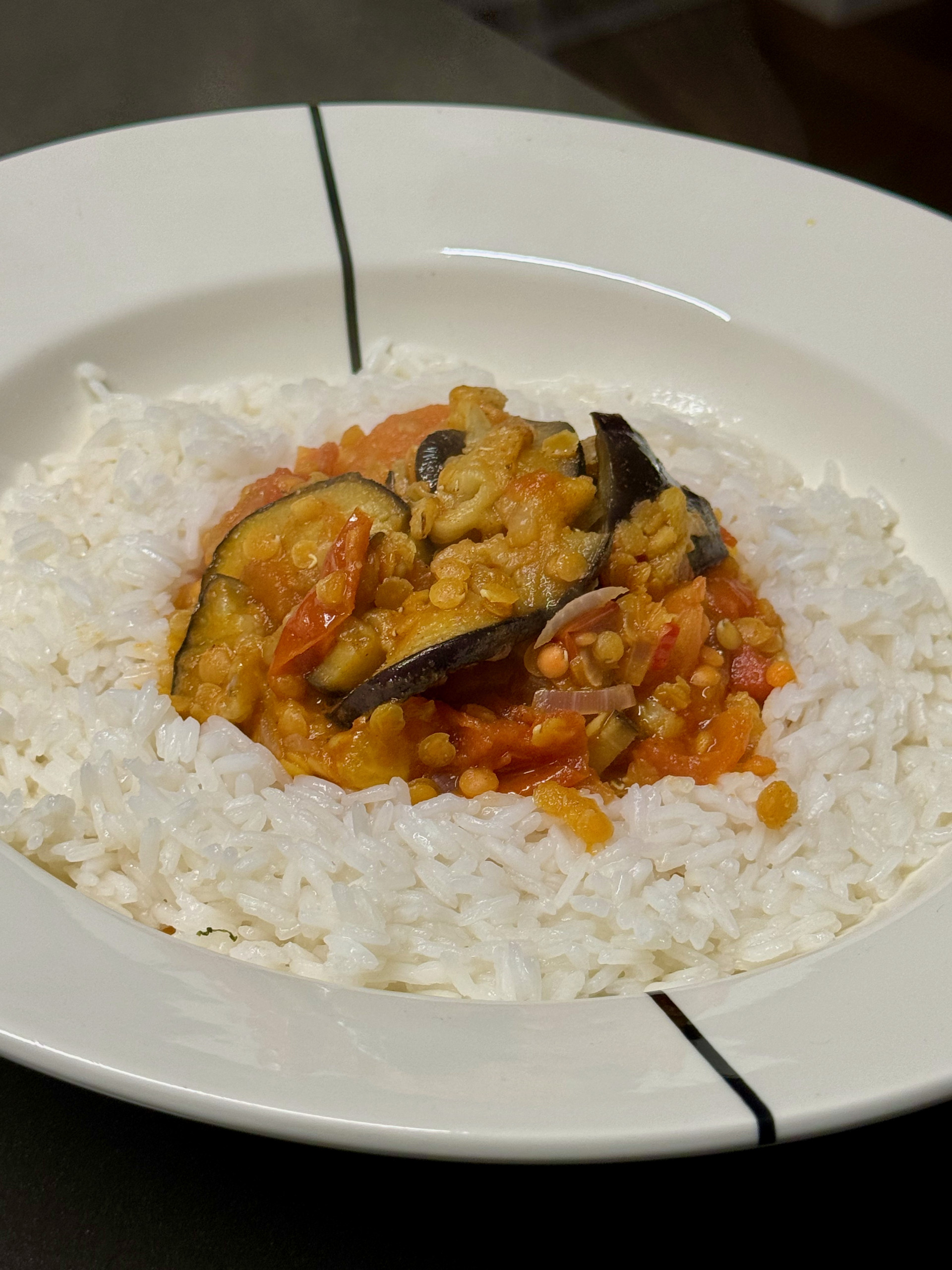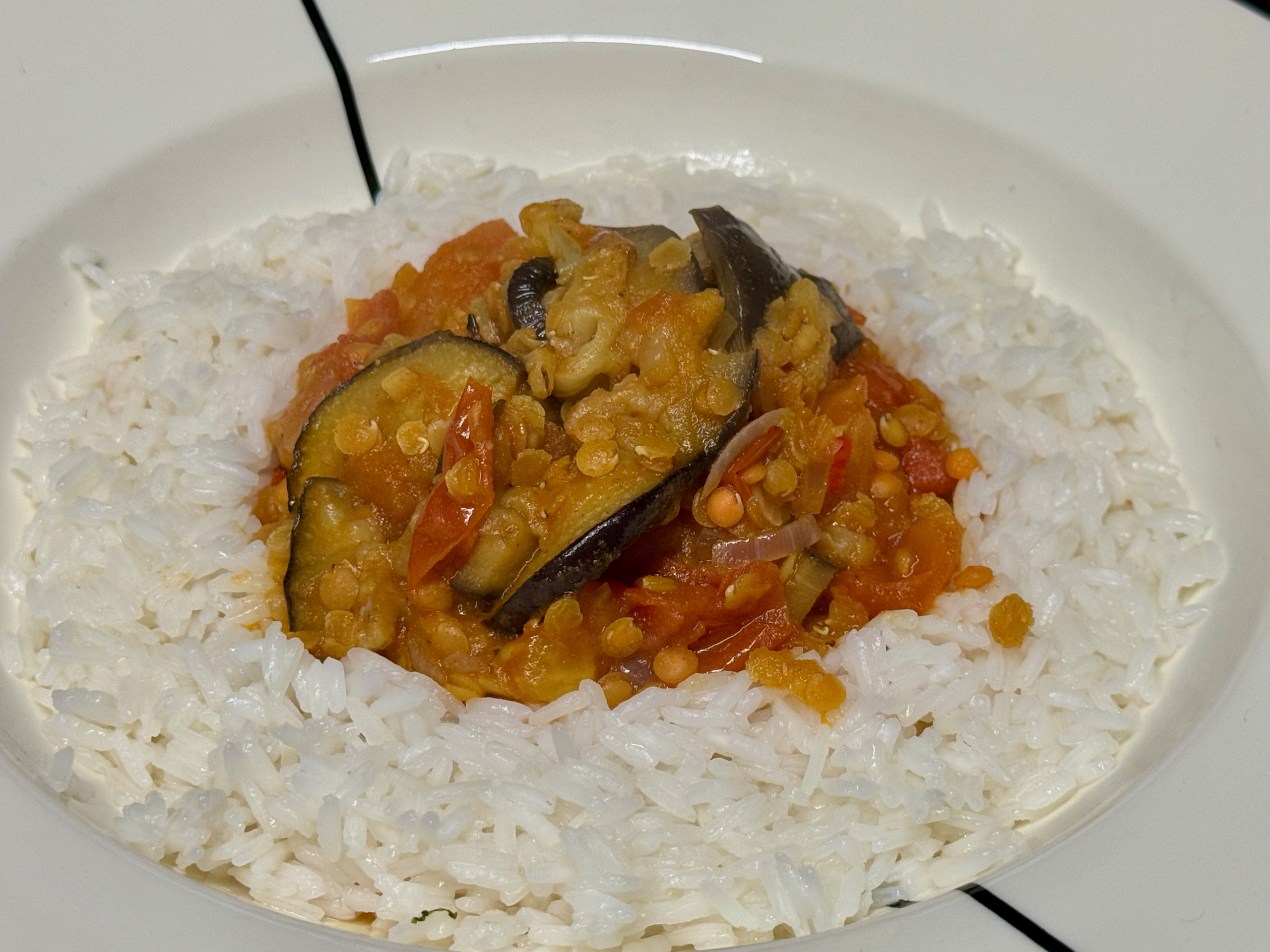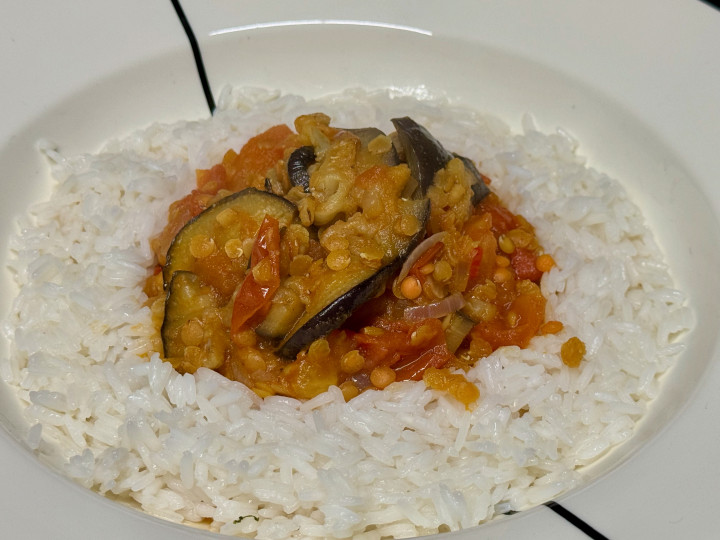
Immerse yourself in the rich, aromatic world of the Indian subcontinent. This delightful tomato-eggplant-lentil curry is a delicious and nutritious plant-based dish that harmoniously combines flavor and health. This curry, full of juicy tomatoes, tender eggplants, and nutritious lentils, brings an explosion of flavors in every bite. It is the perfect dish to enjoy the spicy warmth of Indian cuisine while making the most of fresh vegetables and legumes. Ideal for busy weeknights as well as relaxing weekend dinners, this curry will surely win hearts at the dinner table. Enjoy the colorful presentation and the fragrant spices that fill your kitchen with the promise of a delicious meal.

Tomato-eggplant-lentil curry
Ingredients
- 125 grams red lentils
- 250 ml water
- 9 plum tomatoes
- 2 onions
- 1 eggplant
- 2 cm ginger root
- 1 red chili pepper
- 1 teaspoon cumin powder
- pepper
- salt
Instructions
Preparing the eggplant
- Wash the eggplant and cut off the ends. Then cut them into slices of about 1 centimeter / half an inch.
- Heat some olive oil in a pan and fry the eggplant slices for a few minutes. Then put them aside. Repeat this until all the slices are fried.
Preparing the remaining vegetables
- Remove the skin from the garlic and then cut the cloves into small pieces.
- Also remove the outer skin from the onion. Halve the onion and then cut it into rings.
- Cut away the bitter skin from the ginger root. Then finely chop tor grate it.
- Remove the stem from the red chili pepper. Then halve it lengthwise and remove the seeds. Finally, cut the chili pepper into small pieces.
- Halve the tomatoes and cut away the green stem. Then cut them into small pieces.
Cooking the tomato eggplant lentil curry
- Heat some olive oil in the still warm pan. Then fry the onion, garlic, ginger and red chili pepper in it.
- Now add the tomatoes to the stew. Let them stew for a few minutes.
- Next, add the red lentils, water and fried eggplants to the stew.
- Let the curry simmer for 15 minutes. In the meantime, season with cumin powder, pepper and salt.
- In parallel, cook some rice to serve the curry with.
- Finally, serve the tomato eggplant lentil curry with rice.
Nutrition
How to make tomato-eggplant-lentil curry?
Creating delicious aromas and flavors doesn't have to be difficult at all. With just a few simple ingredients, you can whip up this delightful, refined curry in no time.
Preparing the eggplant
Overcooked eggplants have a delightful deep flavor. For this curry, we'll first briefly bake them before adding them to the curry.
We start by removing the ends of the eggplant. Then, you can cut the eggplant into cubes. Or, as I've done in this case, into slices about 1 centimeter (a bit less than half an inch) thick.
In a large pan, heat some olive oil. In it, fry the eggplant slices on both sides for a few minutes. You can optionally sprinkle them with salt. Then set them aside.
Preparing the remaining vegetables
Remove the skin from the garlic cloves. Then cut the cloves into small pieces.
We also remove the skin from the onion. Then we halve it and cut it into thin rings.
Next, we take care of the ginger root. We remove the bitter skin. Then we cut the ginger root into small pieces. Alternatively, you can also use a grater.
The red chili pepper is undoubtedly the spicy ingredient in the tomato-eggplant-lentil curry. But it's mainly the seeds that are extremely spicy, so we're going to remove them. To do this, we first cut off the tip and halve the chili pepper lengthwise. Then we scrape out the seeds and cut the remaining flesh into small pieces.
Finally, we chop the tomatoes. We first halve them and remove the tough green attachment of the stem. Then we cut the remaining flesh into small pieces.
Cooking the tomato-eggplant-lentil curry
All the ingredients are prepared now. So we are in the final stretch to get the curry ready.
We take the same large pan in which we stewed the eggplants. We add some more olive oil and sauté the onion, garlic, ginger, and chili pepper. You will notice that the delicious aromas fill your kitchen right away.
Next, we add the tomatoes to the stew. They release a lot of moisture, so the vegetables don't burn. Let the tomatoes cook down for a few minutes.
Then it's time for the final step. We now add the lentils, water and eggplant slices to the stew. Let it simmer for about fifteen minutes until the lentils are cooked. You can further season the curry with cumin powder, pepper, salt, and additional spices to taste.
While the curry simmers, you can cook a portion of rice. It should be ready around the same time. Serve the rice immediately with the steaming curry.
More surprising.eggplant
The taste of eggplants is unique and versatile. Here are some features that make this vegetable so special:
- Mild Bitterness: Eggplants have a subtle bitterness that gives their flavor an interesting depth, especially when they are grilled or roasted.
- Umami: They contain a natural umami flavor, similar to that of mushrooms, which makes them a savory and satisfying addition to dishes.
- Spongy Texture: The spongy texture of eggplants absorbs flavors and spices well, making them perfect for marinades and sauces. They take on the flavors of the other ingredients they are cooked with, resulting in a rich, complex taste.
- Smokiness: When grilled or smoked, eggplants acquire a delightful smoky flavor that pairs wonderfully with other roasted or grilled vegetables.
- Flexibility: Eggplants can be prepared in many different ways, from baking and grilling to stewing and pureeing. This versatility means they fit into a wide range of dishes, from curries and stews to dips and salads.
Together, these characteristics make eggplants a beloved ingredient in kitchens around the world. Their ability to absorb flavors and add a unique texture and taste to dishes makes them an indispensable vegetable in many culinary traditions. You can find more delicious recipes with eggplant here:
- Braised eggplant with meatballs.
- Eggplant con chili.
- Stuffed eggplant with minced poultry.
- Vegetarian eggplant burger with tomatoes.
If you speak Dutch, you can find the Dutch version of this recipe on gerechtenweb.blog.