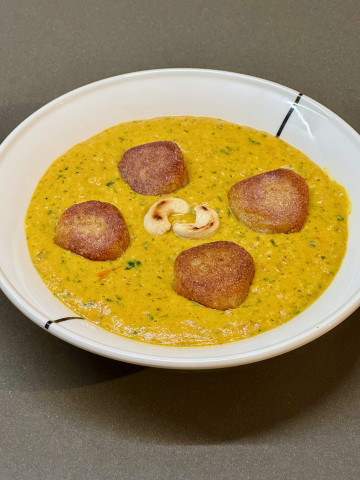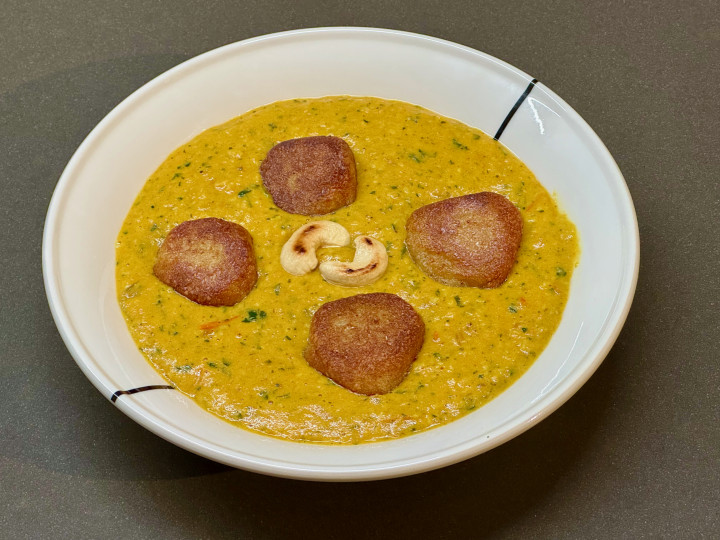
Malai Kofta is, for me, a catapult back to my travels in Nepal and India. Upon arrival, it was always the very first meal on the menu. It's a wonderfully delicious vegetarian dish: little dumplings (kofta) in a creamy sauce (malai). Naturally, it comes with rice. Traditionally, it's made with paneer, an Indian hard cheese. But halloumi works perfectly too.
In this recipe, you'll discover a simple version that fits beautifully into a weekday evening, without sacrificing flavor or atmosphere. And for those curious about the background of this dish and the meaning of malai, you'll find further on in this article a detailed explanation of the origins and tradition of Malai Kofta.

Malai kofta
Ingredients
For the kofta
- 250 grams potatoes
- 150 grams Haloumi cheese or similar
- 2 tablespoons cornstarch
- 1 teaspoon masala spice
- 1 teaspoon cumin
For the sauce
- 200 ml coconut milk
- 50 grams cashews
- 10 grams cilantro
- 3 tomatoes medium sized
- 2 cloves garlic
- 1 onion
- 1 teaspoon cumin
- 1 teaspoon masala spice
- 0,5 teaspoon turmeric
Instructions
Preparing the kofta
- Peel the potatoes and cut them into pieces. Then boil or steam them until tender.
- Cut the Haloumi into cubes.
- Blend the potatoes, Haloumi, starch, and spices in a blender.
- Let the puree cool in the refrigerator.
- Now form balls and fry them in a pan with oil on all sides.
Chopping the vegetables
- Cut the tomatoes into medium-sized pieces.
- Remove the hard skin from the onion and cut it into medium-sized pieces.
- Remove the skin from the fresh ginger. Then cut the yellow root into pieces.
- Remove the skin from the garlic cloves and chop them.
- Finally, finely chop the cilantro.
Making the malai sauce
- Preheat a pan and briefly roast the cashews. Then remove them and chop them.
- Heat some olive oil in a pan and sauté the onion, garlic, and ginger for a few minutes.
- Now add the tomatoes and dried spices (masala, turmeric, cumin) to the stew. Let them simmer for a few minutes.
- Now add the coconut milk, coriander, and cashews to the stew. Bring everything to a boil and simmer for a few minutes.
- Remove from the heat and blend the sauce until smooth.
- Now serve the kofta (meatballs) with the sauce (malai). Enjoy with rice or naan.
Nutrition
How to make Malai Kofta?
As mentioned earlier, this dish consists of two components. On the one hand, you have the vegetarian dumplings (kofta) made with potatoes and halloumi. On the other hand, there's the creamy sauce with tomatoes, coriander, and spices.
Preparing the kofta
First, peel the potatoes. Cut them into pieces, then boil or steam until tender.
Meanwhile, cut the halloumi cheese into small cubes.
Place both the potatoes and halloumi in a blender. Add the starch and spices (masala, cumin, …). Blend until smooth.
Let the purée cool and firm up. You can prepare this in advance and keep it in the fridge.
Roll the mixture into small balls and fry them in a pan with a little oil until browned on all sides.
Preparing the Malai sauce
The sauce is made in two stages: a cold phase (chopping the ingredients) and a warm phase (cooking and blending).
Chopping the vegetables
Since everything will be blended later, it's enough to chop the ingredients roughly-quick and easy.
Lightly roast the cashews in a pan until golden, then chop them. Maybe keep a few aside for garnishing
For the onion: trim the ends, halve it, remove the tough skin, then cut into medium pieces.
Peel the ginger root, then chop it into chunks.
Crush the garlic cloves with the flat of a knife, peel, and chop.
Chop the fresh cilantro.
Finally, halve the tomatoes, cut each half into quarters, then into medium pieces.
Making and blending the Malai sauce
Heat some olive oil and sauté the onion, garlic, and ginger until fragrant.
Add the tomatoes. Stir well, then mix in the dried spices: cumin, turmeric, masala. Adjust the blend to taste. Let simmer for a few minutes.
Add the coconut milk, cilantro, and chopped cashews. Bring back to a boil and let the sauce simmer for several minutes.
Remove from the heat and blend until smooth with a hand blender. Return to the stove briefly, then keep warm until the kofta are ready.
Serving the malai kofta
Place the kofta into the sauce. Serve with rice or naan (Indian flatbread).
About Malai Kofta
Malai Kofta originates from the Mughlai cuisine of the 16th-17th century, during the flourishing of the Mughal Empire in India. The dish was originally served to emperors and court guests as a symbol of luxury and refinement. Malai means cream, and kofta refers to stuffed or fried dumplings. While koftas were often made with meat, Malai Kofta was conceived as a vegetarian variant: tender dumplings of potato and paneer (or halloumi in this case) in a creamy sauce of tomato, cashew, and spices. To this day, it remains one of the most beloved vegetarian curries in North Indian restaurants.
Learn more about Malai Kofta in the following articles:
- The delicious story of malai kofta (cook13).
- What is malai kofta? Learn about this classic vegetarian dish(Sukhi's).
- Everything about malai kofta (Vahrehvah).
About paneer
Paneer is a soft, unsalted Indian cheese that does not melt when heated. This makes it ideal for dishes like Malai Kofta, where the dumplings need to hold their shape. The cheese should not melt directly under heat. In Europe, however, paneer is not always easy to find. A good alternative is halloumi, which is very similar in texture: it stays firm in the pan and gives the koftas a pleasant bite. Halloumi does have a distinct, salty flavor. That's why there's no need to add extra salt to this recipe. The result remains true to the tradition of Malai Kofta, while still being practical and accessible for a weekday kitchen outside India.
More surprising.India
Indian cuisine is full of surprises. And "spiced" doesn't always mean "spicy." It's the interplay of different aromas that creates the most delightful dishes. And when it is spicy, there's always a gentle counterpart served alongside to restore balance. Be sure to try the following recipes:
- Indian kachumber salad.
- Vegetarian banana peel curry.
- Mango lassi with saffron and cardamom.
- Chicken tandoori.
- Vegetarian chickpea curry.
If you speak Dutch, you can find the Dutch version of this recipe on gerechtenweb.blog.