


Moroccan meatballs with chickpeas and vegetables highlights the delightful flavors of juicy lamb or beef meatballs (kefta) combined with a rich, spicy sauce full of vegetables and a fragrant saffron broth. It gives a truly Moroccan feel and does justice to the fantastic ingredients you use. Thanks to the abundance of vegetables, this is naturally a very healthy meal.

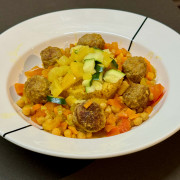
Moroccan meatballs with chickpeas and couscous
Ingredients
For the kefta (meatballs)
- 400 grams minced lamb or beef
- 2 eggs
- 1 onion
- 2 tablespoons breadcrumbs
- 1 teaspoon paprika powder
- pepper to taste
- salt to taste
For the vegetable stew
- 5 tomatoes
- 1 red onion
- 400 grams chickpeas 1 can
- 2 carrots
- 2 stalks celery
- 1 tablespoon Harissa powder
- 1 cube saffron stock or 6 threads of saffron
- 1 dl lukewarm water
- 1 zucchini
- 1 yellow bell pepper
For the Couscous
- 250 grams couscous
- 300 ml water check the cooking instructions on the packaging
Instructions
Making the kefta
- Chop the onion finely.
- Mix the minced meat, eggs, chopped onion, paprika powder and breadcrumbs in a large bowl. Season with salt and pepper.
- Roll into meatballs and put aside. If necessary, put in the fridge to stiffen.
Preparing the vegetables
- Heat the water for the vegetable stew until it is lukewarm. Soak the stock cube or saffron threads in it.
- Peel the carrots and remove the ends. Quarter them lengthwise, then cut them into small pieces.
- Wash the celery stalks and cut them lengthwise. Then cut them into small pieces as well.
- Remove the skin from the onion and cut it into small pieces.
- Halve the tomatoes and remove the green attachment from the stem. Then cut them into small pieces.
- Remove the ends from the zucchini. Then cut it into small pieces as well.
- Remove the top and bottom of the yellow bell pepper. That way we can easily remove the seeds. Also remove the stalk. Then cut the yellow pepper into small pieces.
- Open the can of chickpeas and let them drain well.
Making the Moroccan meatballs with chickpeas and couscous
- Heat some oil in a pan and then fry the meatballs in it until they are nicely browned on all sides.
- In the meantime, heat a tablespoon of oil in a large pot and sweat the onion in it.
- Then add the water with the saffron.
- Next add most of the vegetables to the stew: the carrots, celery and tomatoes.
- Add the Harissa, pepper and salt. Let this simmer for about ten minutes.
- In the meantime, you can also steam the zucchini and the pepper. This will optimally preserve the flavour. If you don't have a steamer, you can also add them to the stew.
- Bring water to the boil for the couscous. Then add the couscous and let it swell without adding any more heat.
- Finally, add the chickpeas and the meatballs to the stew. Let them heat through for five minutes.
- Then serve the couscous with the stewed vegetables and the meatballs. Finish with the steamed vegetables: zucchini and bell pepper.
Nutrition
How to make Moroccan meatballs with chickpeas and couscous?
Because we use so many vegetables, there is quite a bit of prep work to make this Moroccan stew. But the reward is all the greater!
Preparing the meatballs (kefta)
This time, we start with the meatballs. First, finely chop the onion. Then, in a large bowl, we mix all the ingredients for the meatballs together: the minced meat, the eggs, the paprika powder, the onions and the breadcrumbs. Season the mixture further with pepper and salt. Now, knead this until you have a nice cohesive mixture.
And then we can roll the kefta, the meatballs. Depending on how big you roll them, you will end up with between fifteen and twenty meatballs. Place them in the refrigerator, or in a cool place, to rest.
Preparing the vegetables
While the meatballs are resting, we can prepare the vegetables. This will involve a bit of chopping.
First of all, we warm some water until it is lukewarm. In this, we dissolve the saffron broth cube or let the threads soak. The saffron contributes to the wonderful flavor. We'll delve deeper into this later in the article. If you can't or don't want to use saffron, the alternative is regular vegetable broth.
Next, we peel the carrots and remove the ends. We then quarter the carrots lengthwise and cut them into small cubes.
After the carrots, we handle the celery stalks. We first rinse them well and then cut them lengthwise into two or three pieces, depending on their size. Then we cut them into small pieces.
We remove the skin from the onion and then chop it into small pieces.
For the stew, only the tomatoes remain. We halve them and remove the green, tough attachment from the stem. Then we cut them into small pieces.
We will steam the zucchini and the yellow bell pepper. But for that, we must first cut them into small pieces. We remove the ends of the zucchini, then quarter them lengthwise, and finally cut them into small pieces.
For the yellow bell pepper, we cut away the bottom and the top. Then we can easily remove the seeds from inside. We also remove the stem from the top part. As a final step, we chop the flesh into small pieces.
Finally, we open the can of chickpeas and drain it well. Let the chickpeas drain thoroughly.
Cooking the Moroccan meatballs with chickpeas and couscous
After the chopping, the hardest part is done. Cooking, stewing, and steaming the ingredients is not such a big hurdle anymore.
Heat oil in a pan and then fry the meatballs until they are nicely browned on all sides.
Also heat some oil in a large pot, and let the onion sauté in it for a minute.
Then add the remaining vegetables for the stew: the carrots, the celery, and the tomatoes. Mix everything well together.
Now we also add the water with the saffron bouillon to the stew. Season further with harissa spices, pepper, and salt. Let this stew simmer for about ten minutes.
In the meantime, we can also steam the zucchini and the yellow bell pepper. Alternatively, you can cook them, but steaming preserves the flavor better. If you don't want to use an extra pot, you can also add both directly to the stew.
For the couscous, bring water to a brief boil. Then turn off the heat and let the couscous swell in it.
Finally, we add the drained chickpeas and the kefta to the stew. Let them warm through for another five minutes.
Then you can serve the Moroccan kefta with vegetables and couscous.
A word of explanation about some specific ingredients.
This Moroccan stew naturally contains some ingredients that are typical of North African. Since not all of these ingredients are well known to us, we provide a bit of explanation here.
What is kefta?
Kefta (also known as kofta) are spicy meatballs or meat sticks that are popular in many cuisines in the Middle East, North Africa, and South Asia. The meatballs are usually made from lamb, beef, or a combination of both, mixed with various herbs and spices such as garlic, cumin, coriander, and paprika.
By using different spices, everyone can add their personal touch to these Moroccan meatballs. They can be grilled, fried, or stewed. They are usually eaten with delicious sauces, rice, or bread. Large festivals and cultural events often call for kefta. They have a long cultural tradition.
Read more about kefta in the following articles:
About saffron broth
Saffron broth cubes are bouillon cubes that contain aromatic ingredients, including saffron. Saffron is a very costly spice that is harvested from the flowers of the autumn crocus (Crocus sativus). It imparts a unique aroma and flavor to dishes and is often used in the cuisine of the Middle East, North Africa, and South Asia.
Here are some characteristics of saffron bouillon cubes:
- Aroma and flavor: The cubes provide a rich, fragrant taste to the dish and a distinctive saffron aroma.
- Usage: They are often used in soups, stews, and other dishes to add depth and complexity to the flavor.
- Cost: Saffron is one of the most expensive spices in the world due to the labor-intensive harvesting methods.
Additionally, saffron is not only expensive, but the broth cubes with saffron are also rarely found in the average supermarket. Therefore, you can also use saffron threads as an alternative to achieve the flavor.
For more information about saffron and its benefits, you can refer to these sources:
- Saffron - Wikipedia.
- What is saffron - all you need to know (Sara Saffron).
- 11 impressive health benefits of saffron (Healthline).
- What is saffron, and why is it so expensive? (Better Homes & Gardens).
After some research on the world wide web you can also find some saffron stock cubes:
What is Harissa?
Harissa in powder form is a spice blend made from dried peppers and other aromatic ingredients such as cumin, coriander, cinnamon, and ultimately saffron. It gives a delicious, spicy flavor to dishes and is often used in Middle Eastern and North African cuisines. Harissa spices come in various forms, ranging from mild to very spicy, so be mindful of which type you use. It is also sometimes referred to as the North African version of Sambal, which is self explanatory.
Read more about Harissa in the following articles:
- Harissa - Wikipedia.
- What is harissa, and hoe do I cook with it (all recipes).
- Everything you need to know about harissa (Sous Chef).
More surprising.African
African cuisine is full of beauty. And given the fact that the continent is so large, it has a lot of variety. Be inspired by the following African inspired recipes:
- Chickpea balls in bell pepper sauce.
- Braised eggplant with meatballs.
- African peanut stew.
- Green lentil soup with sweet potatoes.
- Thieboudienne.
If you speak Dutch, you can find the Dutch version of this recipe on gerechtenweb.blog.


