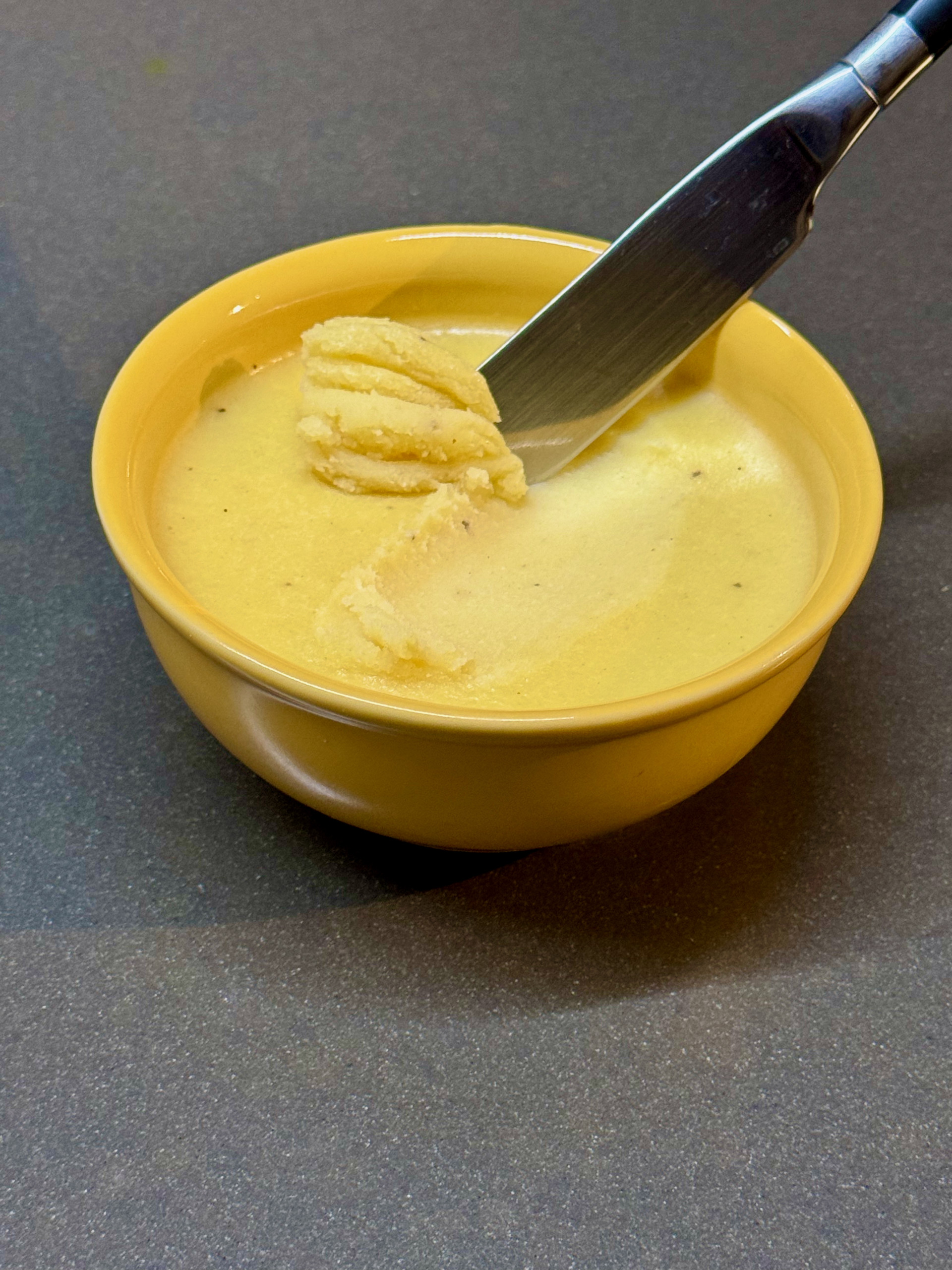
Homemade cheese spread is a delightful, creamy alternative to classical cheese. Unlike traditional cheese, which is typically aged and firm, cheese spread boasts a soft, smooth texture that makes it perfect for spreading on bread, crackers, or veggies. It's made by blending cheeses like cream cheese or Cheddar with other ingredients, such as herbs, spices, and sometimes even wine or beer, resulting in a versatile and flavorful product.
While classical cheese shines in its pure, unadulterated form, cheese spread allows for creative concoctions and can be easily customized to suit various taste preferences. Whether used as a dip, a sandwich topping, or a savory snack, cheese spread brings a rich, indulgent twist to any meal.
Enjoy experimenting with different flavors and recipes to find your perfect blend!


Homemade cheese spread
Ingredients
- 100 grams grated cheese Gouda, Leerdamer
- 50 grams butter
- 50 ml milk
- salt optional, to taste
- pepper optional, to taste
Instructions
- Melt the butter in a pan on low heat.
- Add the milk and the grated cheese. Warm without cooking
- Let the cheese melt and stir regularly.
- Transfer into cups and let it cool down.
Nutrition
How to make homemade cheese spread?
Making a cheese spread is very easy. For the basic version you only need three ingredients: grated cheese, unsalted butter and milk. Then you can pimp it up with some spices. And based on this basic recipe you can make a lot of variations, up to your own imagination.
We start by melting the butter in a pan over low heat. It should melt, but not start bubbling or cooking. When the butter has melted we add the milk and the grated cheese. Gently stir the mixture regularly and make sure it doesn't start cooking. When all the ingredients have integrated well, you can transfer your homemade cheese spread into cups and let it cool down.
Let your fantasy work
First of all, you can of course use different kinds of cheese. Classically Gouda or cheddar are very often used. But be adventurous, and try also some other cheese. Like for example blue cheese (Stilton) which will give it a stronger more explicit taste. Brie, Camembert or cream cheese will create a more creamy texture.
And then there is alcohol. Yes, many recipes for cheese spreads incorporate alcohol. This can be beer, wine or even port. The alcohol will add a lot of flavor to the classical recipe.
Herbs and spices also do a good job in pimping up your cheese spread. Maybe you can try some of the following ideas:
- Herbs and Spices: Fresh herbs like basil, parsley, dill, or chives, and spices like paprika, cumin, or curry powder.
- Nuts: Finely chopped nuts like walnuts, almonds, or pistachios add a delightful crunch.
- Fruits: Dried fruits like apricots, cranberries, or figs for a sweet twist.
- Garlic and Onions: Roasted garlic or caramelized onions can add a savory depth.
- Hot Sauce: A splash of your favorite hot sauce for some heat.
- Mustard: Grainy mustard adds a tangy kick.
- Honey or Maple Syrup: A touch of sweetness to balance the flavors.
Read more abouts cheese spreads in the following articles:
- Cheese spread - Wikipedia.
- Top 9 ways to use spreadable cheese (Yummy bazaar).
- Pub cheese (How sweet eats).
- Obatzda - authentic German beer cheese dip from Bavaria (Dirndl Kitchen).
- Port wine cheese spread (The spruce Eats).
More surprising.spread
Many spreads can be used for breakfast as well as for an appetizer. Find some more surprising spreads in the following recipes:
- Chestnut date mousse.
- Creamy pea mousse.
- Carrot jam with citrus.
- Canary yellow lemon curd.
- Champignons à la Grècque - Greek style mushrooms.
If you speak Dutch, you can find the Dutch version of this recipe on gerechtenweb.blog.